

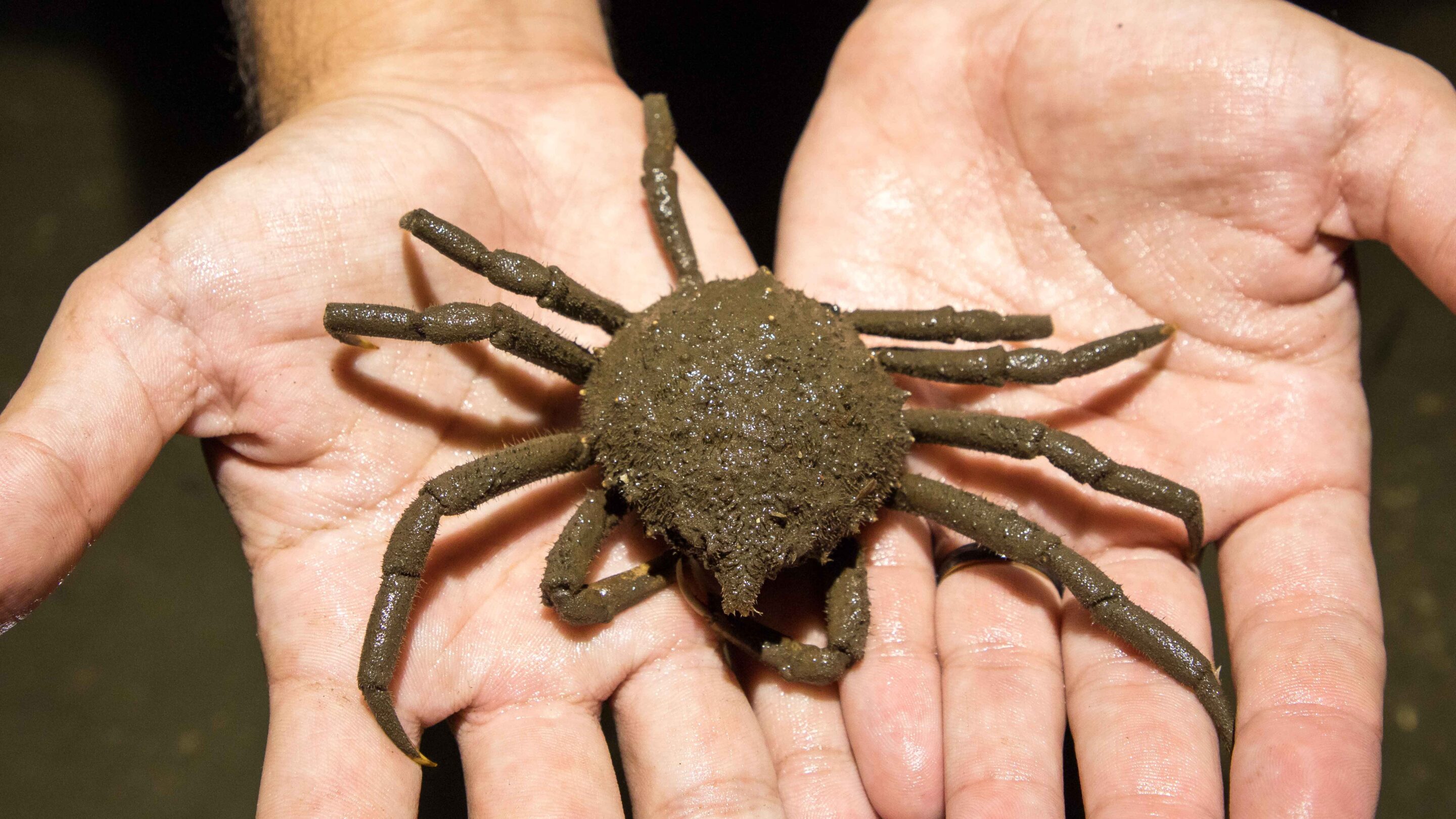
Hudson River Park is home to a number of different crab species, but carcinization is a global phenomena. Grab your passports—we’re taking a crabby trip across the globe to meet fascinating crab species and compare them to the crabs we find right here in the Park.
Black fingered mud crab and Australian giant mud crab
First is the Australian giant mud crab, a species which shares a name with New York’s native black fingered mud crab because both species are often found crawling through or burrowed into the mud that makes up their environment.
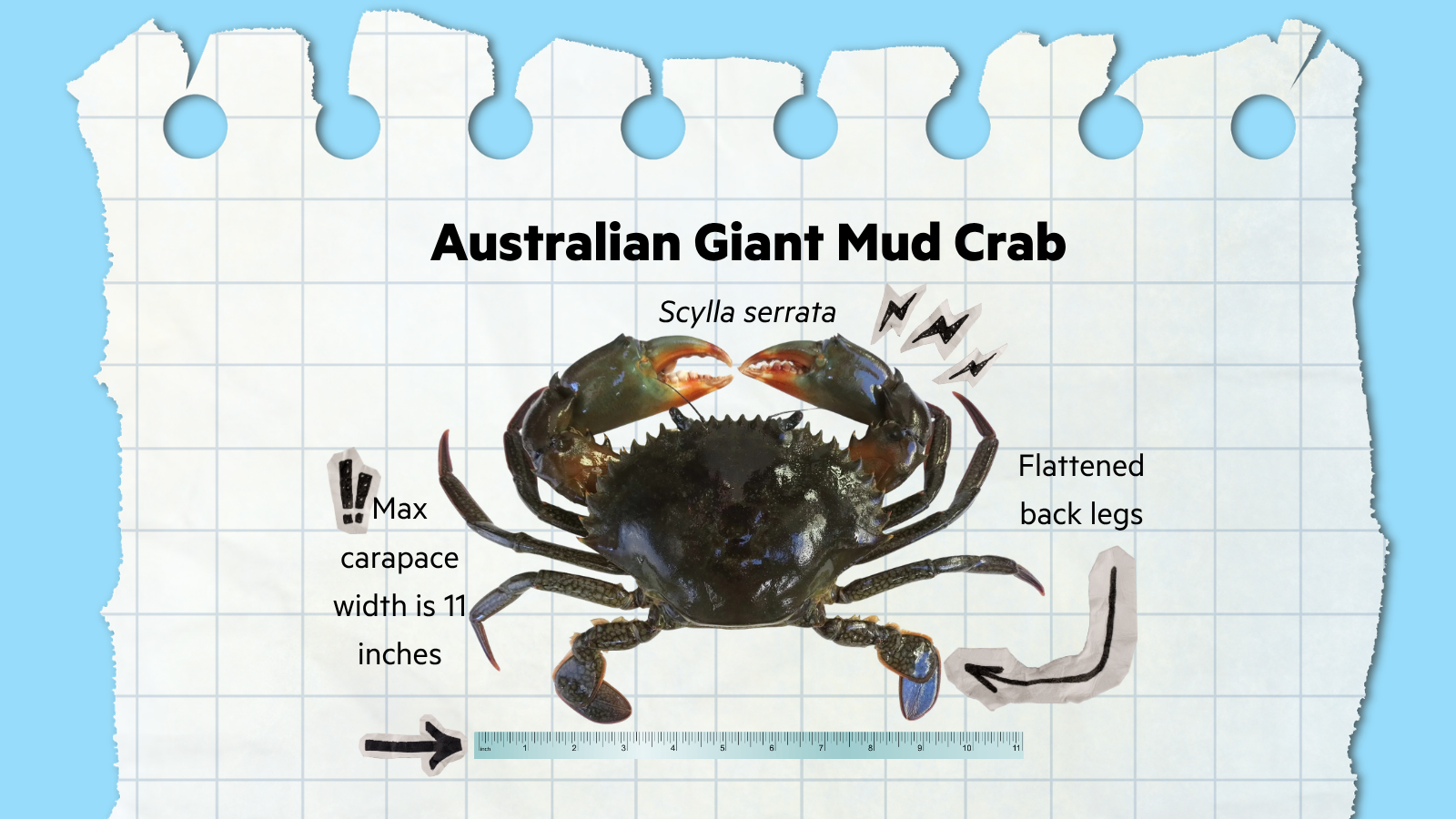
Despite their similar habits, telling the two apart is fairly simple. As their common name suggests, Scylla serrata is pretty much as large as mud crabs get — the maximum recorded carapace width for this species was 11 inches across, with individuals of this size weighing close to eight pounds. Black fingered mud crabs are significantly smaller, with “large” members of the species only growing to a carapace width of 2.5-3.5 inches.
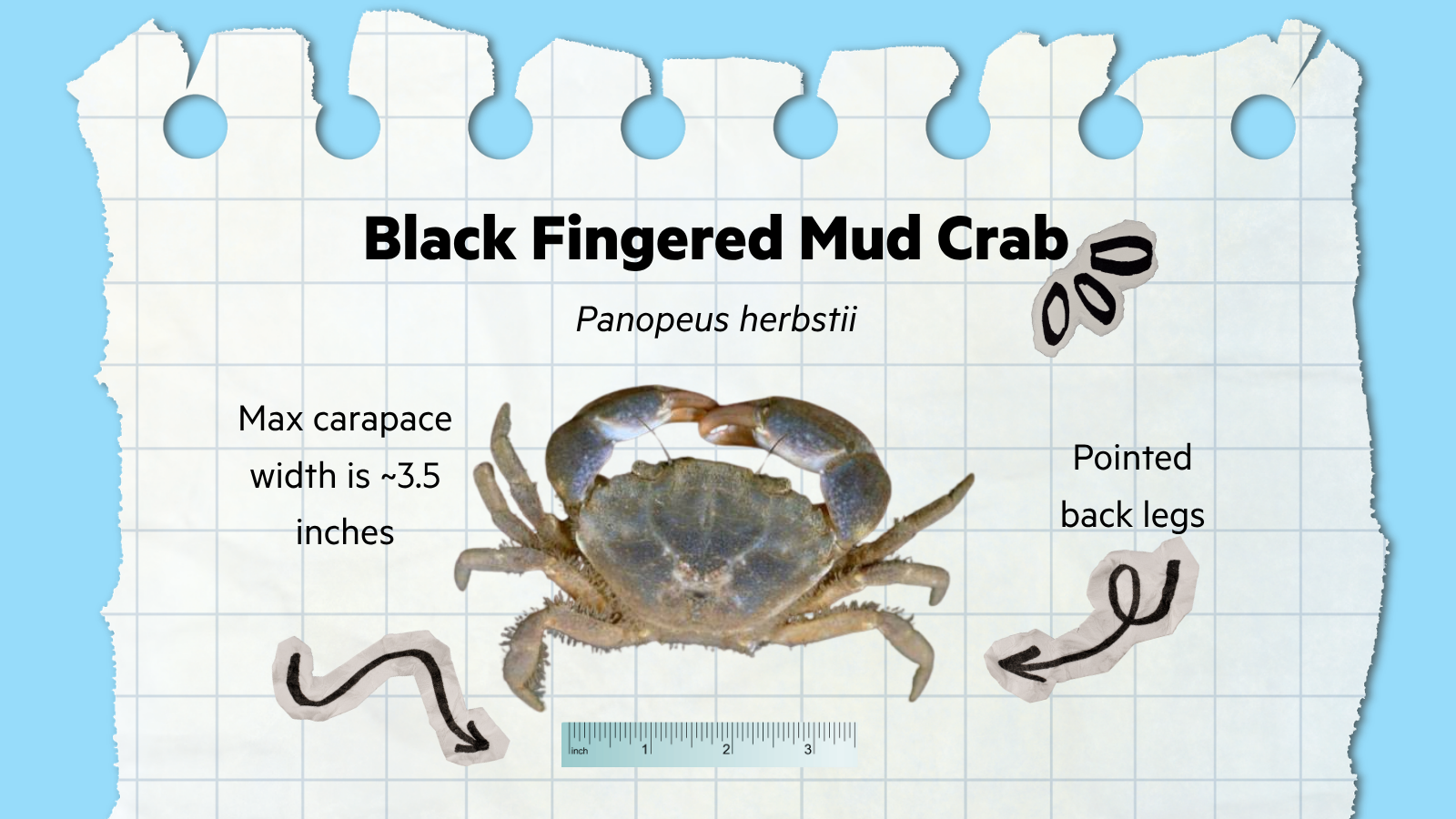
If the size doesn’t help you tell the difference, you can also look at their back pair of walking legs. Australian mud crabs have modified flippers at the end of these appendages, while black fingered mud crabs back legs end in a point.
Spider Crab and Pom Pom Crab
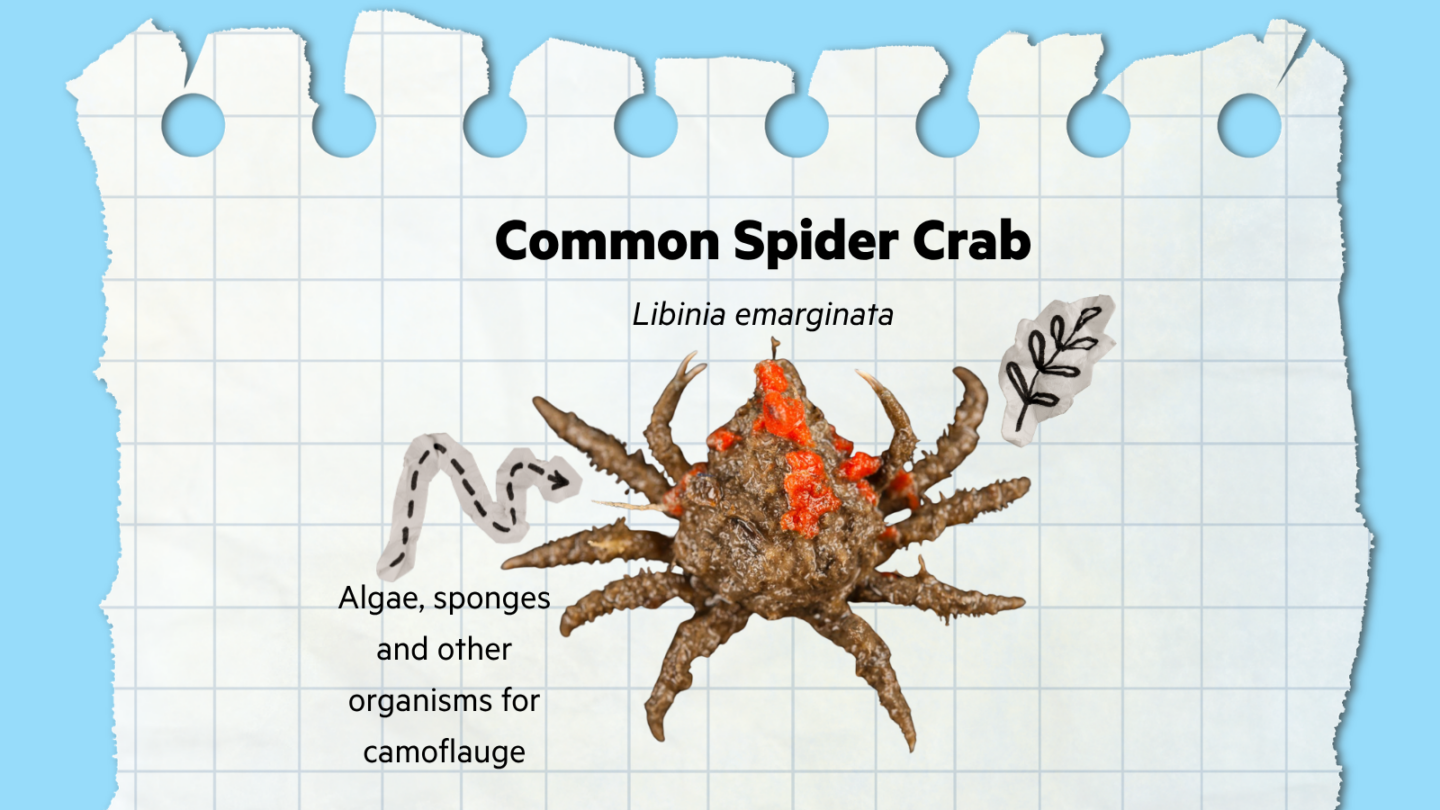
The common spider crab is a Hudson River species well known for their habit of decorating their shells with algae, sponges, shells and other accessories they can find in their environment. These crabs don’t dress up to stand out — they carefully select and arrange their decorations to better camouflage in their environments to avoid predators.
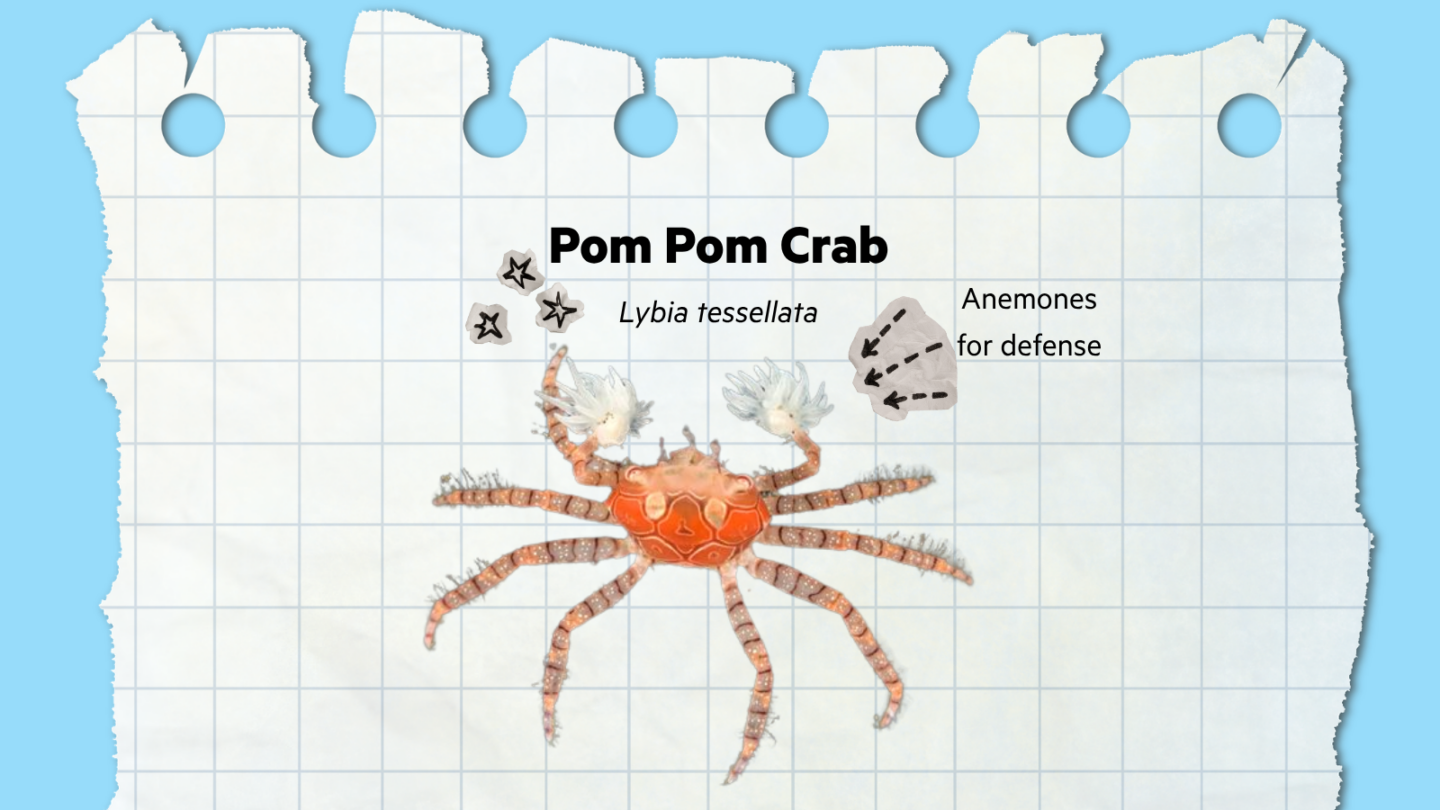
The pom-pom crab, endemic to shallow water habitats in the Indo-Pacific, earn their name from their own brand of accessorization. Their claws are specialized to carry anemones as a form of defense. When threatened, the pom-pomcrab brandishes the anemones like living boxing gloves.
Like their jellyfish relatives, anemones can deliver a powerful sting, which helps to ward off predators and stun potential prey. It may seem like the anemones don’t get anything out of this arrangement, but studies have found that crab-carried anemones grow faster than their stationary counterparts. This is due to increased access to food and water flow that the anemones experience when paired with a pom-pom crab.
Long Clawed Hermit Crab and Coconut Crab
Hermit crabs like the long clawed hermit crab are a common site in coastal environments around the world. While similar in looks to true crabs, hermit crabs belong to a different infraorder called Anomura, which makes them more closely related to other crustaceans like squat lobsters.
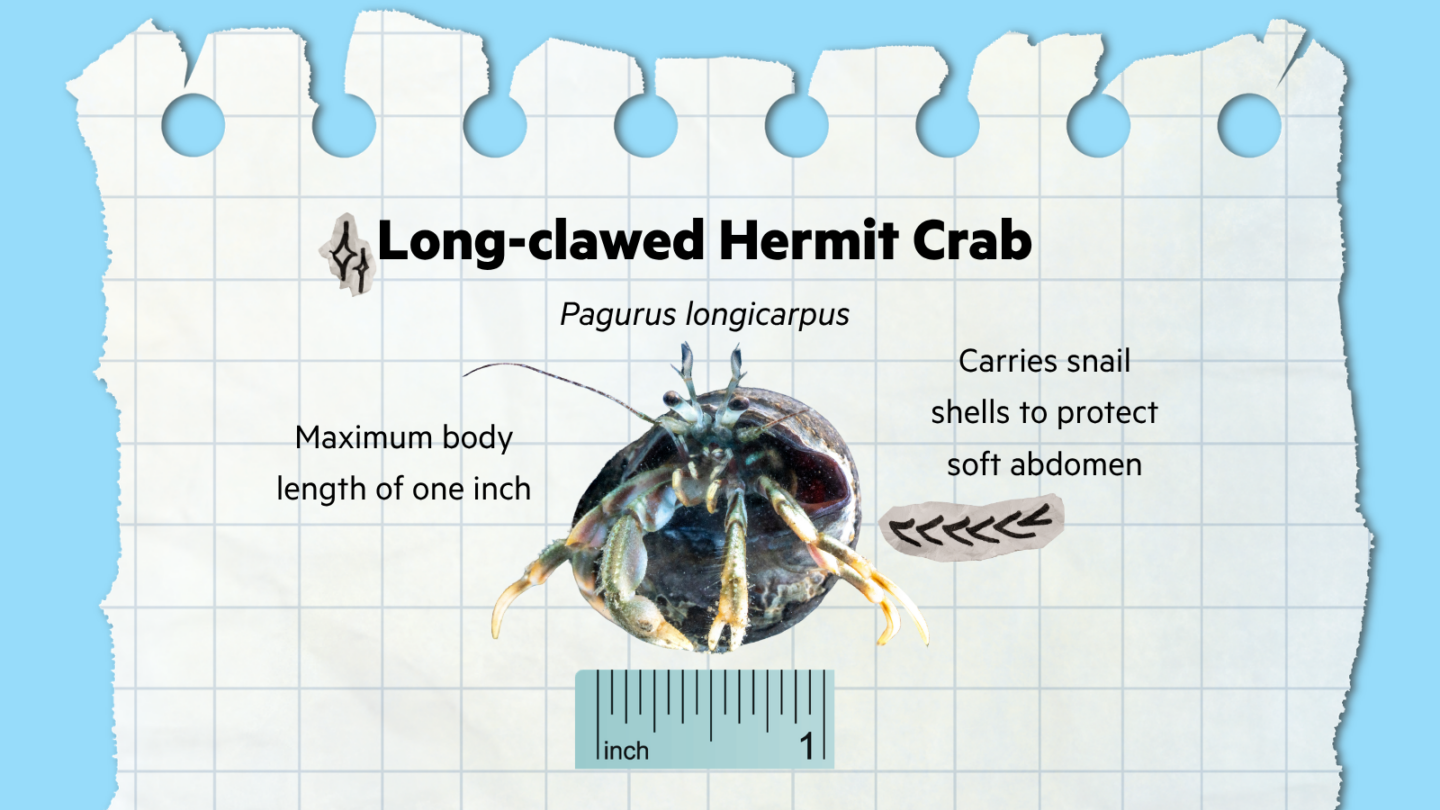
One of the major anatomical differences seen in hermit crabs is their soft, vulnerable abdomen which they protect by wearing scavenged shells, usually from gastropod species living in their environment. The abdomen of hermit crabs features specialized appendages that help to hold, manipulate, and clean their shells. As hermit crabs grow, they need to continuously search for and find larger shells as they outgrow the ones they have.
The coconut crab is the world’s largest land-dwelling invertebrate. Weighing up to nine pounds and reaching a total leg span of up to one meter, these gargantuan crustaceans inhabit islands in the Indian and Pacific oceans. As the name suggests, coconut crabs are famed for eating coconuts, and are able to crack into this ample but hard to access food source using their incredibly strong claws.
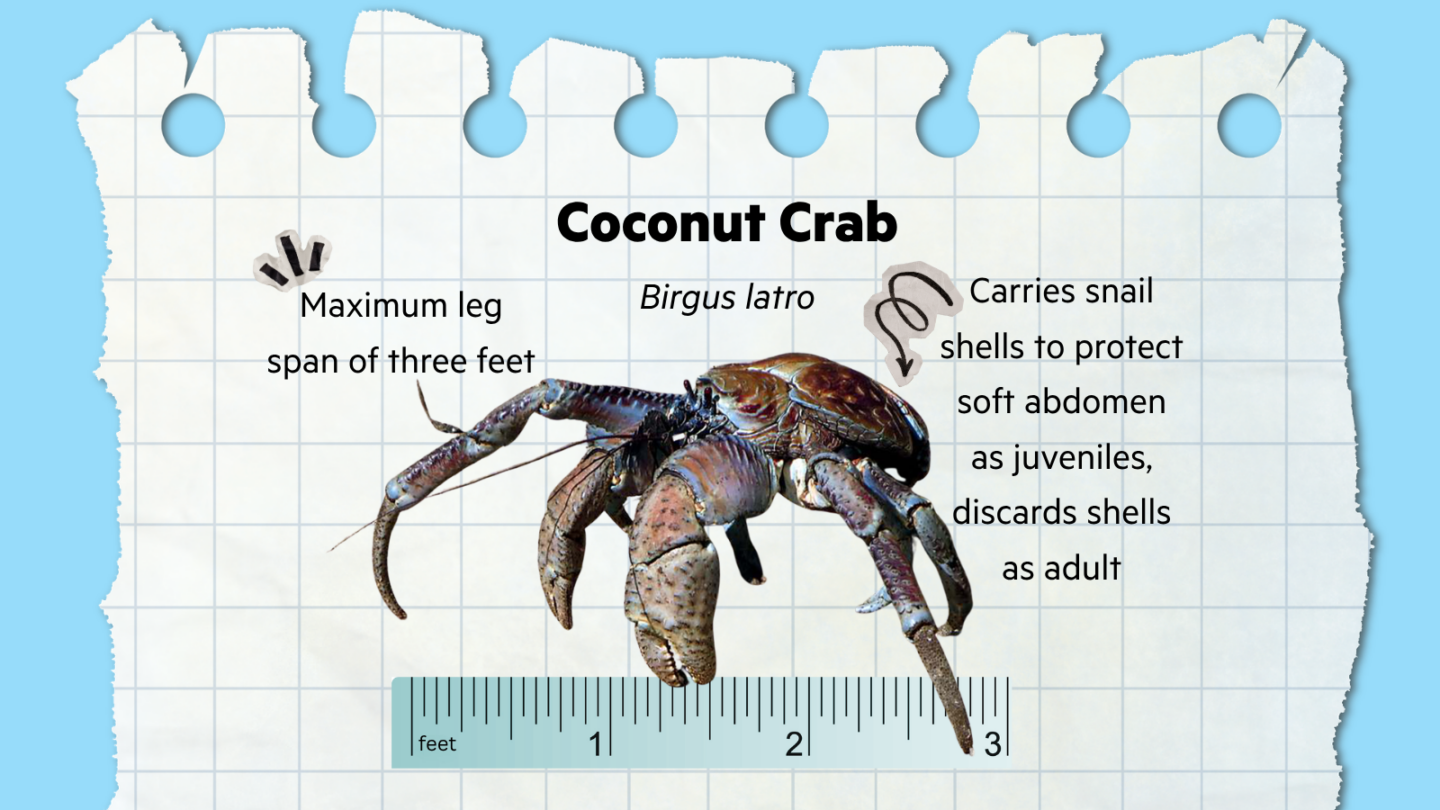
Believe it or not, coconut crabs are actually a species of hermit crab. As larvae and juveniles, they follow the same life history as other hermit crabs species — they grow, undergo metamorphosis into adults, and seek out snail shells as a form of wearable protection. The issue is, unlike most hermit crab species that remain small enough to fit into the shells of local snails, coconut crabs grow so large that none of the naturally available shells are large enough for them to fit into.
Some coconut crabs temporarily wear the coconut shells themselves during this time period, but even the coconuts are eventually too small. At this stage in their lives, coconut crabs undergo another bodily change to deal with this problem — their soft abdomen hardens, removing the need for them to wear shells entirely.
From tiny black fingered mud crabs hiding in our estuary to giant coconut crabs roaming Pacific islands, crabs have adapted to thrive in an amazing variety of habitats. If carcinization has its way, maybe we’ll all end up as crabs someday. Until then, our local species are just one small part of a much bigger global story. Keep exploring to learn more about the crab species you’ll find in Hudson River Park.